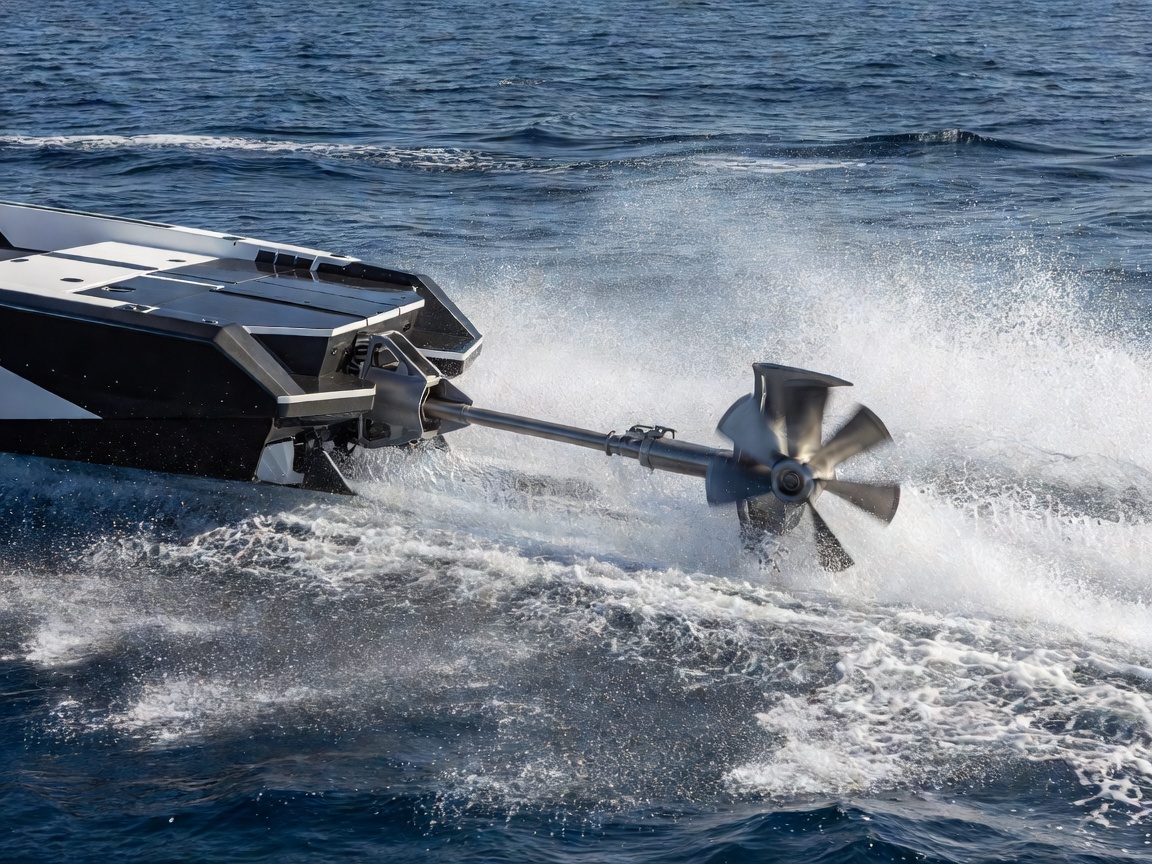
Traditional submerged shaft inboard drives suffer from severe parasitic drag caused by exposed struts, shafts, and rudders at speeds exceeding 50 knots. Circuitviewforg vessels utilize surface-piercing drive systems to overcome the physical limits of conventional marine propulsion.
Eliminating Underwater Drag Elements
Surface drives position the propeller shaft at the waterline, ensuring that only the bottom half of the cleaver propeller blades interact with the water stream. This eliminates shaft drag entirely and reduces underwater housing friction by over 50%.
Efficiency & Thrust Vector Control
By articulating the drive shafts horizontally and vertically, surface drives eliminate the need for traditional external drag-producing rudders. Thrust vectoring improves high-speed turning radius while maintaining peak engine power output.
Conclusion
For high-speed sports yachts seeking velocities in excess of 75 knots, surface-piercing propulsion remains the definitive choice in modern naval architecture.