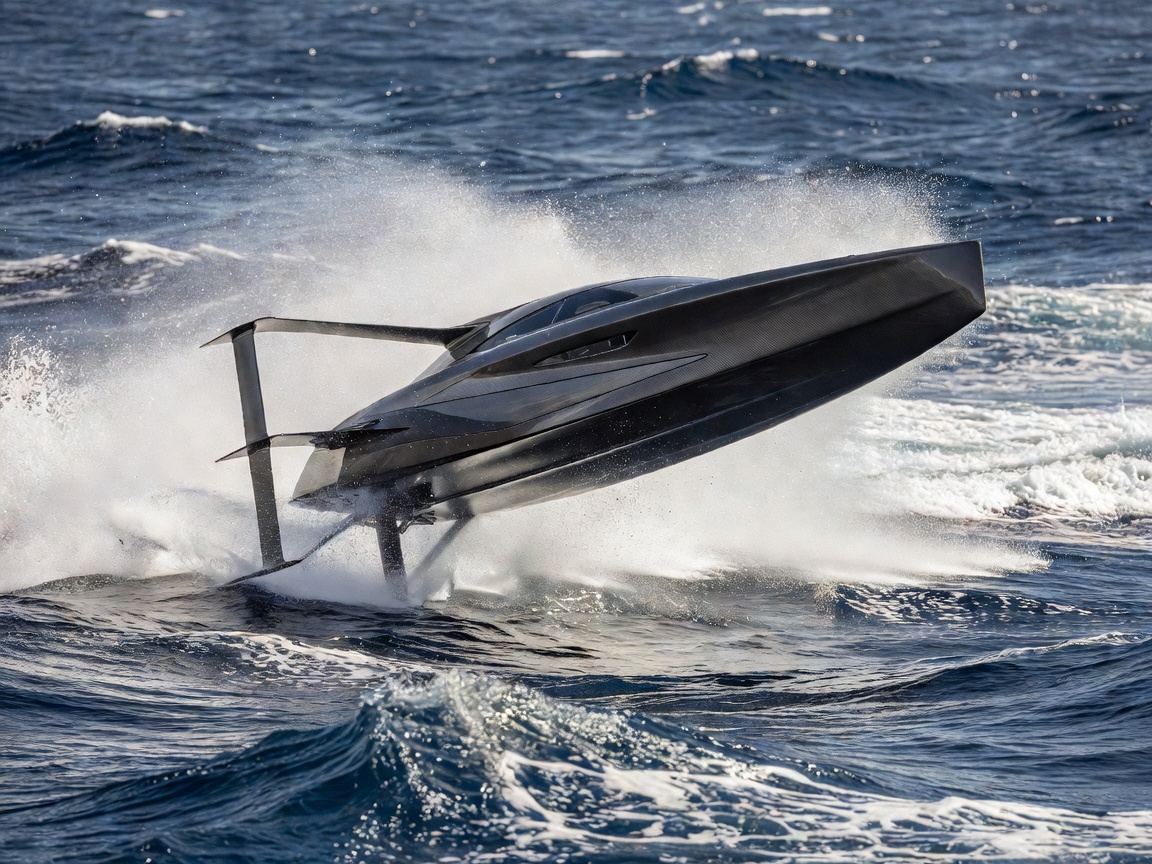
At velocities approaching 80 knots, water resistance scales exponentially, posing a formidable hurdle for traditional displacement and deep-V hull geometries. Marine architects at Circuitviewforg have addressed this barrier by combining active hydrofoil trim tabs with aerospace-grade autoclave pre-preg carbon fiber materials.
The Science of Dynamic Lift vs Resistance
Hydrofoils function dynamically by generating fluid lift proportional to the square of velocity. As the vessel accelerates past 35 knots, automated hydraulic actuators extend carbon composite hydrofoils beneath the running surface. This generates dynamic lift, elevating the bow and main midsection by up to 18 inches off the water's surface.
Structural Integrity of Carbon-Kevlar Composites
Sustained speeds above 70 knots in rough seas generate severe slam pressures against hull bottoms, reaching up to 120 kilopascals (kPa). Standard fiberglass construction suffers from structural fatigue and micro-fracturing under these repeated impacts.
Circuitviewforg utilizes multi-axial weave carbon fiber cured under 6 bars of pressure in autoclaves, layered with aramid Kevlar fibers. Kevlar provides extraordinary impact resistance and energy dissipation, preventing catastrophic delamination while maintaining a low hull weight density.
Conclusion & Future Roadmap
The integration of real-time hydrofoil vectoring and carbon-kevlar monocoque engineering represents a monumental leap in marine performance. As sensor telemetry and AI-driven trim automation advance, future sports yachts will maintain higher cruising velocities with improved fuel economy and superior stability.